
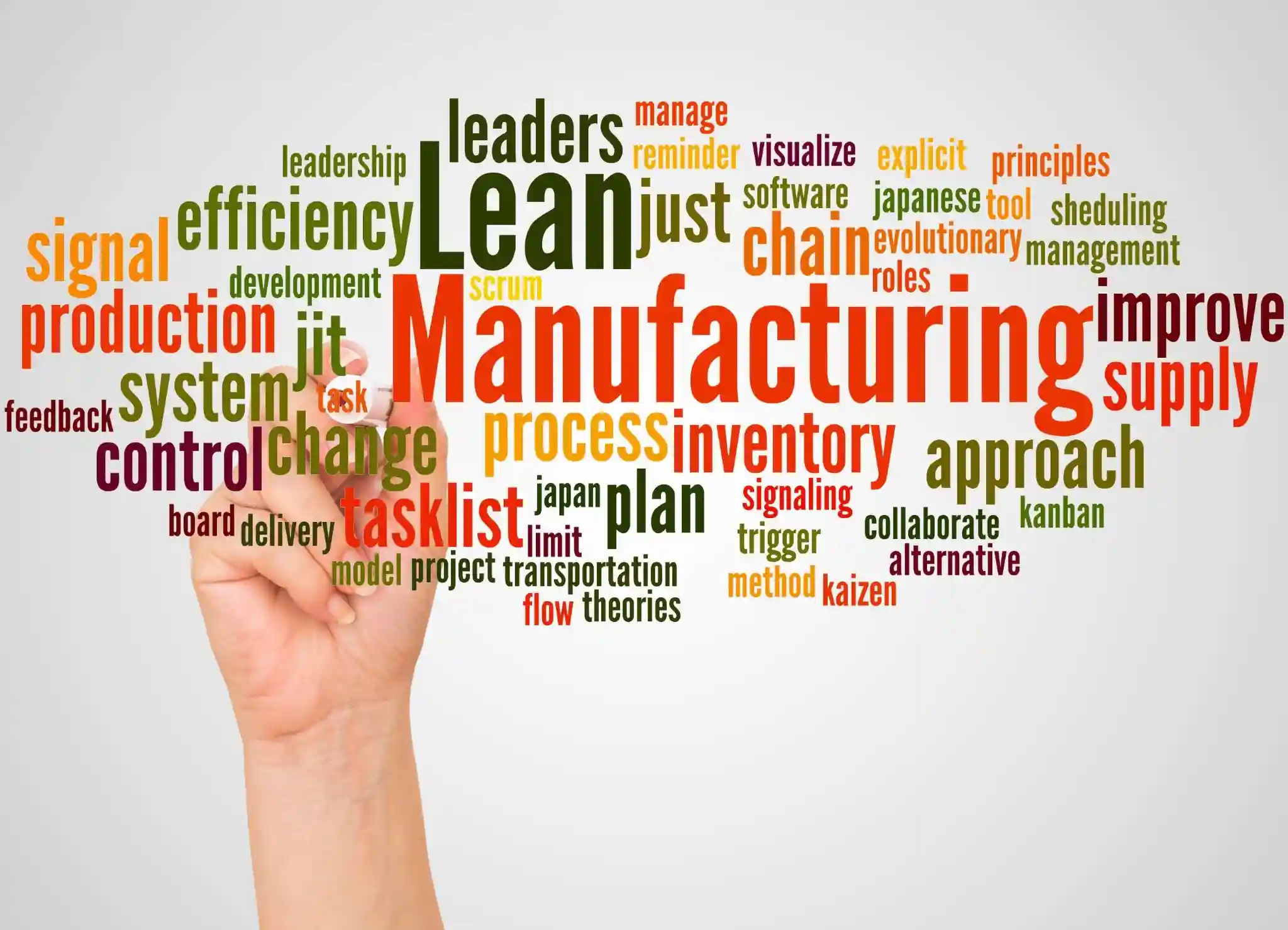
Lean manufacturing is not just a management trend. It is a survival strategy. In an era where margins are tight and customer expectations are rising, companies cannot afford inefficiency. Waste costs money. Delays damage reputation. Poor quality destroys trust.
Lean manufacturing tools were developed to solve exactly these problems. From Toyota’s production floors to modern smart factories, these methods have transformed how businesses operate. But which Lean manufacturing tools truly deliver measurable results? And how do companies use them effectively rather than mechanically? Let’s explore the tools that consistently create impact: 5S, Kaizen, Kanban, Value Stream Mapping, Just-in-Time, SMED, Poka-Yoke, and Total Productive Maintenance.
Why Lean Manufacturing Tools Matter More Than Ever
Global competition is intense. Supply chains are fragile. Customers demand faster delivery and higher quality. According to recent industry reports, manufacturers that implement Lean principles effectively can reduce operational costs by up to 20 percent and improve productivity by 15 to 30 percent within the first year.
But Lean is not about working harder. It is about working smarter. Lean manufacturing tools focus on eliminating non-value-added activities, reducing variation, and empowering employees to solve problems daily. When used correctly, these tools create a culture of continuous improvement rather than one-time transformation.
5S: Building the Foundation of Operational Excellence
5S is often the first Lean tool companies adopt. It seems simple, yet its impact is profound. The five steps, Sort, Set in order, Shine, Standardize, and Sustain—create workplace organization and discipline.
In a metal fabrication plant I once studied, operators spent nearly 15 minutes per shift searching for tools. After implementing 5S, search time dropped to less than two minutes. That translated into thousands of productive hours saved annually.
How 5S Improves Productivity
A clean and organized workspace reduces motion waste. Employees find what they need quickly. Safety incidents decline because clutter disappears. Visual controls make abnormalities obvious. More importantly, 5S builds accountability. When everyone participates, ownership increases. The workplace becomes a shared responsibility rather than management’s burden.
Why 5S Fails in Some Organizations
5S fails when companies treat it as a cleaning campaign instead of a cultural shift. Without leadership support and regular audits, standards fade. Sustainability is the hardest part. Consistency makes 5S effective.
Kaizen: The Power of Continuous Improvement
Kaizen means continuous improvement. It focuses on small, incremental changes rather than dramatic overhauls. Many leaders believe improvement requires large investments. Kaizen proves otherwise. In one automotive assembly unit, a simple suggestion from a worker, repositioning a component tray, reduced assembly time by 12 seconds per unit. That small change saved thousands of hours per year.
The Psychology Behind Kaizen
Kaizen empowers frontline employees. When workers see their ideas implemented, engagement rises. Studies show that companies with strong employee involvement programs experience higher productivity and lower turnover rates. Kaizen fosters a mindset that problems are opportunities. Instead of blaming individuals, teams analyze processes.
Kaizen Events vs Daily Kaizen
Kaizen events are structured improvement workshops lasting a few days. They generate quick results. Daily Kaizen, however, embeds improvement into everyday routines. The most successful organizations combine both approaches.
Kanban: Visualizing Workflow and Reducing Bottlenecks
Kanban is a visual scheduling system that controls workflow. Originally designed for Toyota’s production lines, it now influences manufacturing, logistics, and even software development. By using visual signals to trigger replenishment or production, Kanban prevents overproduction and reduces inventory. Overproduction is considered the most expensive form of waste in Lean philosophy.
How Kanban Enhances Efficiency
Kanban boards show real-time task status. Bottlenecks become visible immediately. Teams respond quickly instead of reacting after delays occur. Inventory levels decrease because production aligns with actual demand. This reduces storage costs and frees up capital.
Kanban in Modern Digital Manufacturing
Today, digital Kanban systems integrate with ERP software and IoT sensors. Real-time data enhances responsiveness. Yet the principle remains simple: produce only what is needed, when it is needed.
Value Stream Mapping: Seeing the Entire Process Clearly
Value Stream Mapping, often called VSM, is a diagnostic tool. It visualizes every step in a process, from raw material to finished product delivery. In one case study from a consumer goods manufacturer, VSM revealed that 70 percent of total lead time was waiting time. Once identified, the company redesigned its scheduling and reduced lead time by 40 percent.
Identifying Hidden Waste
VSM highlights transportation delays, excess inventory, rework loops, and communication gaps. It reveals the difference between value-added and non-value-added activities.
From Current State to Future State
The real power of Value Stream Mapping lies in designing a future state map. Teams do not just analyze problems. They create a blueprint for improvement.
Just-in-Time: Producing Exactly What Is Needed
Just-in-Time, or JIT, aligns production with customer demand. It minimizes inventory while maximizing responsiveness. When implemented correctly, JIT reduces carrying costs and storage space requirements. However, it requires reliable suppliers and stable processes.
Balancing Efficiency and Risk
The pandemic exposed vulnerabilities in global supply chains. Companies relying heavily on JIT without risk management faced disruptions. Today, organizations combine JIT principles with strategic buffer planning to maintain resilience.
SMED: Reducing Setup Time
Single-Minute Exchange of Die, known as SMED, focuses on minimizing equipment changeover time. In printing and packaging industries, setup times once lasted hours. By applying SMED principles, some companies reduced changeover time by more than 50 percent. This enabled smaller batch sizes and greater flexibility.
Why Setup Reduction Matters
Shorter setups allow companies to produce in smaller quantities. That reduces excess inventory and improves responsiveness to customer demand.
Poka-Yoke: Designing for Zero Defects
Poka-Yoke means mistake-proofing. It prevents errors before they occur.
For example, a connector that fits only one way eliminates assembly mistakes. Such simple design modifications dramatically reduce rework and warranty claims. Quality improves not because employees try harder, but because systems make errors impossible.
Total Productive Maintenance: Maximizing Equipment Reliability
Equipment breakdowns disrupt production and increase costs. Total Productive Maintenance, or TPM, involves operators in preventive maintenance activities. Companies implementing TPM often report significant reductions in unplanned downtime. Equipment reliability increases. Overall Equipment Effectiveness, known as OEE, improves steadily.
Employee Involvement in Maintenance
When operators inspect and maintain their own machines, they detect early warning signs. Small issues get resolved before becoming major failures.
Integrating Lean Manufacturing Tools for Maximum Impact
No single Lean manufacturing tool guarantees success. The real effectiveness emerges when tools work together. 5S creates order. Kaizen drives improvement. Kanban controls flow. VSM identifies waste. TPM ensures reliability. SMED increases flexibility. Poka-Yoke safeguards quality. Integration transforms isolated initiatives into a comprehensive Lean system.
Real-World Example of Lean Transformation
A mid-sized electronics manufacturer struggled with long lead times and frequent quality defects. After conducting Value Stream Mapping, they implemented 5S across departments and introduced Kanban for inventory control.
Within twelve months, lead times decreased by 35 percent. Inventory costs dropped significantly. Customer satisfaction scores improved. The transformation was not dramatic overnight. It was steady and disciplined.
Expert Advice for Implementing Lean Successfully
Lean is not about copying tools. It is about understanding principles. Leadership commitment is critical. Without visible support from top management, initiatives fade. Training employees thoroughly ensures consistency. Metrics must align with Lean objectives. Short-term financial pressure should not undermine long-term improvement goals. Most importantly, culture determines success. When improvement becomes part of daily work rather than a project, results sustain.
Measuring the Effectiveness of Lean Manufacturing Tools
Companies should track key performance indicators such as cycle time, defect rate, OEE, and inventory turnover. Data-driven evaluation confirms progress. Benchmarking against industry standards also provides perspective. Continuous measurement prevents complacency.
The Future of Lean in Smart Manufacturing
Lean principles remain relevant even in Industry 4.0 environments. Automation and artificial intelligence enhance Lean execution. Real-time data supports faster decision-making. However, technology alone cannot replace Lean thinking. Waste elimination and continuous improvement remain human-driven philosophies. As sustainability gains importance, Lean tools also contribute to environmental efficiency by reducing material waste and energy consumption.
Conclusion
The most effective Lean manufacturing tools are those aligned with organizational needs. 5S builds discipline. Kaizen drives engagement. Kanban optimizes flow. VSM reveals inefficiencies. TPM protects assets. SMED enhances flexibility. Poka-Yoke ensures quality.
Effectiveness depends not on complexity but on commitment. Companies that embrace Lean as a mindset rather than a toolkit consistently outperform competitors. Lean manufacturing is not about perfection. It is about progress. Small improvements, applied consistently, create extraordinary results.
FAQs
What is the most important Lean manufacturing tool for beginners?
For organizations starting their Lean journey, 5S is often the best foundation. It builds workplace discipline and visual management. Once processes are organized and standardized, companies can implement more advanced tools like Kanban and Kaizen with greater effectiveness and sustainability.
Can Lean manufacturing tools work in small businesses?
Yes, Lean manufacturing tools are highly effective in small businesses. In fact, smaller organizations often see faster results because communication is simpler and change adoption is quicker. Even basic tools like Kaizen and 5S can significantly reduce waste and improve profitability.
How long does it take to see results from Lean implementation?
Results vary depending on commitment and scope. Some improvements, such as workplace organization through 5S, can deliver visible benefits within weeks. Broader cultural transformation through Kaizen and system-wide Lean integration typically requires sustained effort over months or years for lasting