
The manufacturing industry is the most robust part of the global economy, which promotes innovation, increased productivity, and competitiveness. The world of manufacturing is changing at a rate never before seen as we sail through the intricacies of the 21st century. The current design, production and delivery of products are being remodeled by technological changes, evolving consumer needs and the necessity of ensuring sustainability.
1. Additive Manufacturing (3D Printing)
The concept of additive manufacturing, also referred to as 3D printing has become a revolution in the world industry. By doing so, the manufacturers are able to make complex geometries and tailored products in a series of layers, with a variety of materials, such as metals, plastics and ceramics.
Impact: 3D printing minimizes waste, shortens the production cycle and allows rapid prototyping. Aerospace, automotive and healthcare industries are utilizing this technology to create lightweight parts, medical implants and even structures, becoming more efficient and innovative.
2. Internet of Things (IoT)
IoT refers to a network of interdependent devices, which gather and communicate information. IoT sensors are also applied in manufacturing by connecting to machines and equipment to give real-time data regarding operational performance, equipment health, and logistics of the supply chain.
Impact: With the help of the IoT technology, manufacturers can streamline processes, minimize downtime and enhance predictive maintenance through tool maintenance secrets. This connectivity improves transparency and makes it possible to use data to make decisions that result in a higher level of productivity and decreased operational expenses.
3. Artificial Intelligence (AI) and Machine Learning
The use of algorithms with AI and machine learning is becoming a more common aspect in manufacturing. These technologies process large volumes of data to determine trends, make forecasts and software to automate the execution of complex tasks.
Impact: AI-powered systems increase the quality control, enhance production schedules and improve the inventory management. As an illustration, machine learning algorithms can forecast machine breakages before they happen, which will make it possible to ensure that machines are maintained so that the production line does not get disrupted significantly.
4. Robotics and Automation
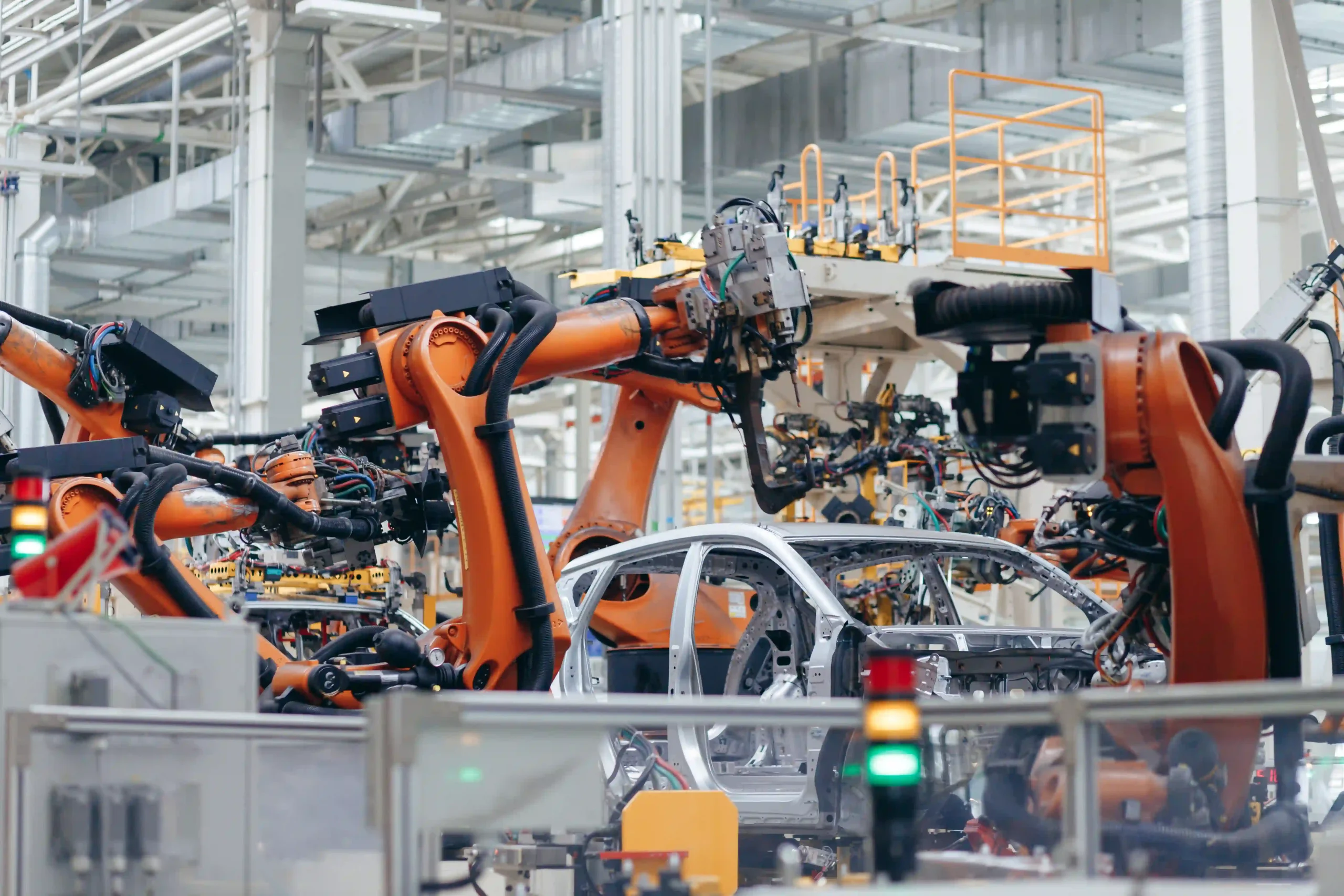
Robots have habitually been used in manufacturing, however, the improved robotics technology is elevating automation to new levels. Cobots, also known as collaborative robots, are used to support human workers and contribute to a safer and more productive working environment.
Impact: Production sees a reduced cost of labor, greater accuracy, and faster production. Robotics technology is currently finding applications in various sectors including assembly lines, packaging and handling of materials and so making the manufacturing processes very efficient and reliable.
5. Advanced Materials
The manufacturing environment is changing owing to the creation of sophisticated materials. Lightweight composites, smart materials, and nanomaterials are among the innovations that are allowing more powerful, lightweight and tougher products to be produced.
Impact: These materials can be used to provide increased performance and functionality that will enable manufacturers to create products that will address the needs of the current consumers. An example is aerospace companies relying on the high level of the composite to cut aircraft weight resulting in fuel efficiency and low emissions.
6. Digital Twins
Digital twin technology is a technology that establishes a virtual image of a physical system, process, or asset. The manufacturers can study the performance and anticipate the results of any change in the physical environment by modelling actual conditions.
Impact: Digital twins allow manufacturers to streamline their operations, ensure cost reduction, and enhance product design. This technology can make informed decisions and risk management in the global industry by offering insights into performance and the possible problems.
7. Sustainable Manufacturing Practices
Consumer demand and regulatory pressures are making sustainability a desperate issue in manufacturing. New technologies of sustainable development are becoming popular, including waste management, energy efficiency, and the principles of the circular economy.
Impact: Environmentally friendly manufacturing has less environmental effect and improves brand image. The companies that embrace the green practices can reduce their costs of operations, appeal to consumers who are environmentally conscious, and comply with regulatory rules, which will eventually lead to a more sustainable global industry..
8. Cloud Computing
Cloud computing is transforming the ways through which manufacturers store data and use it to work together along the chain of the supply. Using cloud-mediated platforms the companies are able to get real-time information, optimize and improve communication with suppliers and customers.
Impact: Cloud computing enhances accessibility of data and cooperation, which allows manufacturers to react promptly on change of the market. This agility and innovation is promoted by this flexibility, making companies more adaptable to changes in the consumer needs and competitive pressures.
9. Blockchain Technology
The blockchain technology presents a decentralized and secure way of documenting transactions and tracking assets. Blockchain has the potential to improve traceability, the transparency of the supply chain in manufacturing and curb fraud.
Impact: The application of blockchain enables manufacturers to make sure the supply chains are intact, the products are genuine, and the products are more likely to meet regulatory requirements. The technology creates trust between the stakeholders and improves operational efficiency in the international industry.
10. Augmented Reality (AR) and Virtual Reality (VR)
AR and VR are changing the training and maintenance of the manufacturing business. These technologies are offering immersive experiences to support learning and operational efficiency.
Impact: AR and VR technologies allow employees to see complex tasks and get real-time guidance as well as to simulate a situation to train it. Such an innovation saves time on training, enables improved safety and boosts productivity in general on the manufacturing floor.
Conclusion
The above innovations are not only transforming individual firms; they are changing the whole industry in the world. With the continued evolution of manufacturing, adoption of these technologies will be important in firms that are interested in remaining competitive in an ever changing market. With the use of the innovations discussed in the article, namely additive manufacturing, IoT, AI, and sustainable practices, manufacturers will be able to promote efficiency, increase the quality of their products, and promote sustainable development.
The leaders of the global industry in this age of fast change will be characterized by the capacity to meet the current situation and be innovative. In the future, manufacturers will need to keep up with the latest technology and invest in it, which will enable a culture of constant improvement and education. The manufacturing industry has a brighter future that awaits, and those who will adopt innovation will be leading the bright side of this change.