
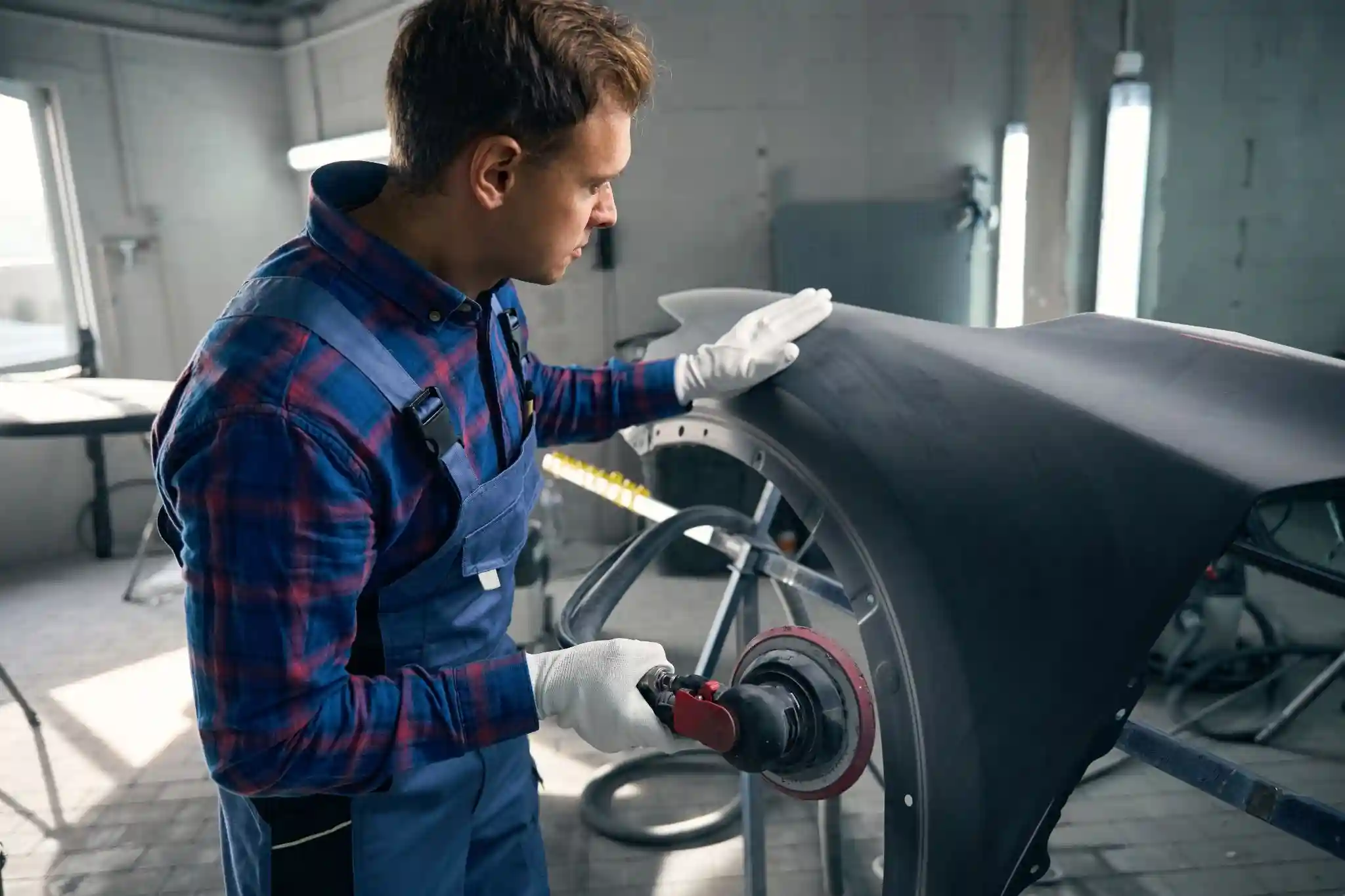
The ideal surface finish is not merely the aspect of looks but it is an indicator of quality, productivity, and technical perfection in contemporary manufacturing. Be it motor parts of engine machinery or mini-parts of electronics, it is apparent that accuracy in grinding methods is the key to producing the surfaces at the highest standards of flatness, smoothness and uniformity. In the contemporary manufacturing world, the individuals who excel at these tricks do not simply satisfy the standards, they create new standards of excellence.
The importance of Surface Finish in the Contemporary World of Production
Consider the case of an aerospace engineer who is checking turbine blades. Every part is supposed to be fitting and must work well without any leftover surface defects which could lead to turbulence, wear or even a certain disaster. It is no exception in any of the industry sectors like medical equipment, automobile and optics where any single imperfection in the surface finish can spell out the difference between success and failure.
Surface finish impacts:
-
Performance: Friction/heat lowered resulting in better operational performance.
-
Longevity: It reduces the wear and tear, and prolongs the life span of components.
-
Aesthetics: Beautiful professional appearance, which is important with consumer products.
-
Reliability: removes the possibility of cracks, pitting or adhesion during assembly.
These are the advantages that make the main manufacturers make huge investments in the new grinding technology and operators with high level of skills.
The Art of the Precision Grinding Methods
The act of cutting down material with a piece of abrasive wheel is known as grinding to produce a fine surface finish. However, so-called real precision grinding is not merely a matter of removing material, precision grinding is a choreographed assembly of machine accuracy, selection of wheels, machine parameters and operator skills.
Key aspects include:
1. Choosing the Right Abrasive
Precision grinding is done using diamond and CBN (cubic boron nitride) which is particularly used on hard metals and ceramics. Aluminum oxide and silicon carbide can still be considered as an option of less demanding jobs.
2. Condition and Machine Rigidity
There is also precision grinding that requires machines with minimum vibrations and high stability. A 2024 report by the International Manufacturing Technology Show (IMTS) indicated that improved spindle housings and linear motion guides could result in up to 25 percent enhancement of the quality of surface.
3. The relevant application Optimal Coolant Application
The coolant is not only about the temperature but it is also about washing away grit and ensuring the proper contact between the wheel and the part. New green-friendly coolants and streamlined delivery systems have also assisted firms such as AeroParts Ltd. to cut thermal damages and enhance finishes by 30.
Learning Fine Surface Finish: Mastery of Essentials
Infeed and Plunge Grinding
They are traditional methods in which the exact quantities of material are cut off in a controlled form: ideal in cylindrical grinding as well as surface grinding. The minimum heat and micro-roughness can be reduced by feeding and optimizing wheel speeds.
Creep-Feed Grinding
This is a game-changer because it is an advanced method. Creep-feed grinding works on the idea that instead of making shallow passes and deep passes, the wheel is moved very slowly and a lot more material is removed on each pass. The result? Shorter cycle times and surface finishes of sub-micron.
CNC Precision Grinding
In the present day CNC (computer numerical control) systems allow accuracy and repeatability at the micron level. These machines together with high resolution feedback systems are crucial to manufacturers such as Meditech Components who depend on uniform finishes to medical implants.
Real-Life Case: Production of Automotive Transmissions
The example is that of Supreme Gears, an auto supplier, which has a reputation of ultra-smooth transmission gears. As of 2023, having changed their CBN wheels to high-precision and made an investment in real-time vibration sensors, they wrote:
-
A 40 percent decrease in the post-grind polishing labor.
-
20% decrease in reject rates
-
Regular values of Ra lower than 0.12 microns.
Their tale plays emphasis on the fact that accuracy grinding provides both the physical economic gain and the quality that is leading in the industry.
Professional Vitality: What The Experts Say
Experts in the industry will attest that accomplishment of final surface finish is not determined by the cost of the grinder but by balancing of all factors involved in the process. According to Emily Jensen, one of the foremost scientists of materials, it is about consistency. With the latest monitoring technologies operators can make changes to the speeds and feeds as they happen and not just on guesswork.
The combination of periodic maintenance of machines, quality of personnel, and high-level process monitoring yield the most benefits at the workstations, not only in terms of finish, but also productivity and cost control.
Recent Studies and Future Projections
The trend towards more environmental and efficient production is boosting the innovation in abrasives and the technologies of the coolant. A study in the Journal of Advanced Manufacturing (2025) points out the use of new nano-engineered abrasives to provide sharper cutting edges capable of self-renewing, with increased life than the traditional wheels and providing a high quality finish every time.
Also, AI-based process analytics are finding their way to the shop floor, where operators are able to tune parameters on the fly to achieve the best results.
What are the Precision Grinding Methods of Ultimate Surface Finishes?
The advanced abrasives, stable machining, CNC control, and fine-tuned process parameter methods of precision grinding feature to maintain the highest possible surface finishes on critical applications of the industry.
FAQs
1. Which tool is most suitable when needed to be fine grained?
Modern precision grinding operations produce the best results with diamond and CBN wheels as they are the most accurate and produce the smoothest results.
2. What is the significance of surface finish?
The enhanced surface finishes in the manufacturing industries are associated with better product durability, performance, and reliability due to reduction in friction as well as wear.
3. Is there an increase of consistency in CNC grinding?
Yes, CNC precision grinding offers repeatability, high quality finishes and thus is suitable in industries requiring tight tolerances and accuracy.