
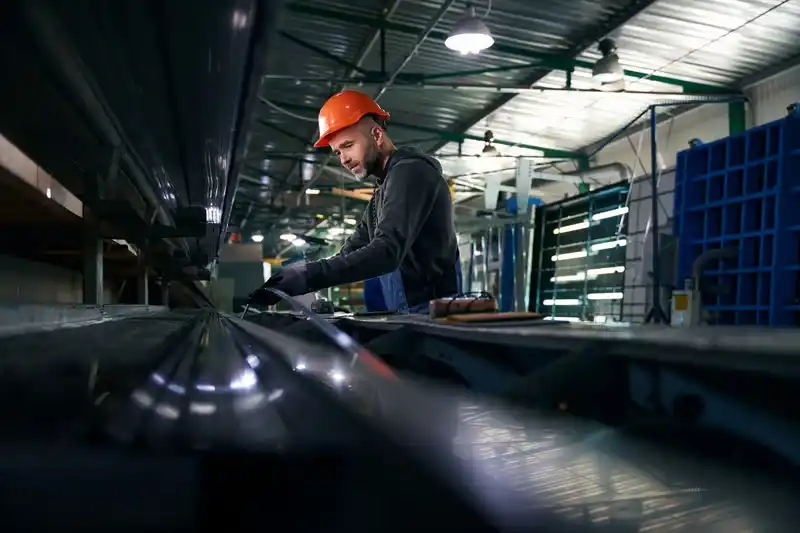
In today’s highly competitive global market, companies are under constant pressure to deliver better quality, faster service, and lower costs—all at the same time. This is where lean manufacturing becomes a powerful strategy. Originally developed in the Toyota Production System, lean manufacturing is not just a production method but a complete philosophy focused on eliminating waste, improving efficiency, and maximizing customer value.
At its core, lean manufacturing is about doing more with less—less time, less waste, less cost, and fewer errors. But the real impact goes beyond factory floors. It directly influences product quality and customer satisfaction, two of the most important drivers of long-term business success.
In this in-depth guide, we’ll explore how lean manufacturing improves quality and customer satisfaction, supported by real-world examples, expert insights, and research-backed principles that make it one of the most widely adopted operational strategies in modern industry.
Understanding lean manufacturing in simple terms
Before exploring its benefits, it’s important to understand what lean manufacturing actually means. In simple terms, it is a systematic approach to minimizing waste while maximizing productivity. Waste can include excess inventory, unnecessary motion, defects, waiting time, overproduction, and inefficient processes.
The philosophy of lean manufacturing is built on one key principle: delivering maximum value to the customer with minimal resources. This means every step in the production process must add value. If it doesn’t, it is considered waste and should be eliminated or improved.
Industries ranging from automotive and electronics to healthcare and logistics have adopted lean manufacturing because it creates measurable improvements in both operational efficiency and product quality.
The connection between lean manufacturing and quality improvement
One of the most significant impacts of lean manufacturing is its direct influence on product quality. Traditional manufacturing systems often focus on final inspection to catch defects. Lean manufacturing, however, emphasizes preventing defects at the source.
This shift from detection to prevention is critical. When companies identify problems early in the production process, they reduce rework, scrap rates, and customer complaints. Techniques such as continuous improvement (Kaizen), standardized work, and root cause analysis are central to this approach.
For example, Toyota—one of the pioneers of lean manufacturing—built its reputation on producing highly reliable vehicles by embedding quality checks at every stage of production rather than relying on end-stage inspection alone. This proactive approach ensures that defects are identified and corrected immediately, improving overall product consistency.
Research from manufacturing studies shows that companies implementing lean principles often experience significant reductions in defect rates and production errors, sometimes by as much as 30 to 50 percent depending on industry maturity.
Eliminating waste to improve efficiency and quality
A core principle of lean manufacturing is waste elimination. Waste not only increases costs but also negatively affects product quality and customer experience. When processes are inefficient, errors are more likely to occur.
There are several types of waste targeted by lean manufacturing, including overproduction, unnecessary transportation, excess inventory, waiting time, defects, over-processing, and unused employee creativity.
By systematically identifying and eliminating these inefficiencies, companies create smoother workflows. This leads to fewer interruptions, better resource utilization, and more consistent output quality.
For instance, in a traditional production environment, excess inventory might hide quality issues. However, lean systems reduce inventory levels, making problems visible sooner. This visibility allows teams to address issues quickly, preventing defective products from reaching customers.
How lean manufacturing enhances customer satisfaction
Customer satisfaction is closely tied to product quality, delivery speed, and reliability. Lean manufacturing improves all three of these areas simultaneously.
First, lean systems reduce production delays by eliminating bottlenecks. Faster production cycles mean customers receive products more quickly. In industries like automotive or electronics, where demand is highly time-sensitive, this can significantly improve customer experience.
Second, lean manufacturing ensures consistent product quality. Customers are more satisfied when they receive products that meet or exceed expectations every time. Consistency builds trust, and trust leads to long-term loyalty.
Third, lean systems reduce costs by minimizing waste. These savings can be passed on to customers in the form of competitive pricing, making products more attractive in the marketplace.
A real-world example can be seen in Dell’s supply chain model, which incorporates lean principles to produce customized computers with minimal inventory. This allows customers to receive tailored products quickly while maintaining high quality standards.
Continuous improvement and customer-centric thinking
One of the most powerful aspects of lean manufacturing is its focus on continuous improvement, also known as Kaizen. This philosophy encourages employees at all levels to constantly look for ways to improve processes, reduce waste, and enhance quality.
Continuous improvement ensures that companies do not become stagnant. Instead, they evolve based on customer feedback and operational data. This adaptability is crucial in maintaining high customer satisfaction in rapidly changing markets.
In a lean environment, customer feedback is treated as a valuable input for improvement. If customers report issues, those issues are analyzed, and root causes are addressed to prevent recurrence. This proactive approach strengthens the relationship between businesses and their customers.
Standardized processes and consistency in production
Consistency is a key driver of customer satisfaction, and lean manufacturing achieves this through standardized processes. Standardization ensures that every product is manufactured using the same procedures, tools, and quality checks.
When processes are standardized, variation decreases. Reduced variation leads to fewer defects and more predictable outcomes. Customers benefit because they receive products that meet consistent quality standards every time.
Standard work also makes training easier for employees, reducing errors caused by miscommunication or lack of experience. This improves overall operational stability and product reliability.
The role of employee involvement in lean manufacturing
Unlike traditional top-down manufacturing systems, lean manufacturing emphasizes employee involvement. Workers are encouraged to identify problems, suggest improvements, and participate in decision-making.
This involvement has a direct impact on quality. Employees who work on the production line often have the best understanding of inefficiencies and potential improvements. By empowering them, companies can identify issues faster and implement more effective solutions.
Studies in organizational behavior show that companies with high employee engagement often experience better quality outcomes and higher customer satisfaction. This is because engaged employees take ownership of their work and are more committed to delivering high-quality products.
Real-world example of lean manufacturing success
A well-known example of lean manufacturing in action is Boeing’s production system improvements. By implementing lean principles, Boeing reduced assembly time, improved workflow efficiency, and significantly reduced defects in aircraft manufacturing.
Another example is Nike, which has adopted lean principles in parts of its supply chain to reduce waste and improve sustainability. These improvements not only enhance operational efficiency but also strengthen brand reputation, which directly influences customer satisfaction.
These real-world cases show that lean manufacturing is not limited to small improvements—it can transform entire industries when applied correctly.
Reducing lead time and improving delivery performance
Lead time refers to the time it takes from order placement to product delivery. One of the major benefits of lean manufacturing is its ability to reduce lead time significantly.
By eliminating unnecessary steps and improving workflow efficiency, companies can deliver products faster without compromising quality. This speed is especially important in industries where customer expectations are high and competition is intense.
Shorter lead times improve customer satisfaction because customers receive their products faster and with fewer delays. In today’s fast-paced economy, speed is often just as important as quality.
Lean manufacturing and error prevention systems
Another important aspect of lean manufacturing is its focus on error prevention rather than correction. Techniques such as poka-yoke (error-proofing) are used to design systems that prevent mistakes before they happen.
For example, in assembly lines, tools may be designed in a way that only allows correct installation of parts. This reduces human error and ensures higher product quality.
By preventing errors at the source, companies reduce rework costs and improve overall efficiency. Customers benefit from receiving defect-free products, which enhances satisfaction and trust.
Data-driven decision making in lean systems
Modern lean manufacturing is increasingly data-driven. Companies use real-time data to monitor production processes, identify inefficiencies, and make informed decisions.
This data-centric approach allows organizations to detect quality issues early and respond quickly. Predictive analytics can even anticipate potential failures before they occur.
By leveraging data, lean manufacturing becomes more precise and effective, leading to continuous improvements in both quality and customer satisfaction.
The psychological impact of quality on customers
Quality is not just a technical measure—it also has a psychological impact on customers. When customers consistently receive high-quality products, they develop trust and emotional loyalty toward the brand.
Lean manufacturing contributes to this by ensuring consistency, reliability, and attention to detail. Over time, this builds a strong brand reputation, which is one of the most valuable assets a company can have.
Satisfied customers are more likely to return, recommend products, and provide positive reviews, creating a cycle of long-term business growth.
Challenges in implementing lean manufacturing
While the benefits of lean manufacturing are significant, implementation is not always easy. It requires cultural change, employee training, and continuous commitment from leadership.
Some organizations struggle with resistance to change or lack of understanding of lean principles. Without proper training and leadership support, lean initiatives may fail to deliver expected results.
However, companies that successfully implement lean manufacturing often see substantial improvements in efficiency, quality, and customer satisfaction.
Conclusion
Lean manufacturing is more than just a production strategy—it is a complete philosophy that transforms how businesses operate. By focusing on waste reduction, continuous improvement, employee involvement, and process standardization, it significantly enhances product quality and customer satisfaction.
From faster delivery times to fewer defects and improved consistency, the benefits of lean systems are both measurable and long-lasting. Real-world examples from global companies demonstrate that lean manufacturing can reshape industries and create sustainable competitive advantages.
In a world where customer expectations continue to rise, adopting lean manufacturing is not just an option—it is becoming a necessity for businesses that want to stay competitive and relevant.
FAQs
What is lean manufacturing in simple terms?
Lean manufacturing is a production approach that focuses on reducing waste while improving efficiency and quality. It ensures that every step in the process adds value for the customer and eliminates anything unnecessary, leading to better performance and higher satisfaction.
How does lean manufacturing improve product quality?
Lean manufacturing improves quality by preventing defects at the source rather than fixing them later. It uses continuous improvement, standardized processes, and error-prevention techniques to ensure consistent and reliable output with fewer mistakes and higher efficiency.
Why is customer satisfaction important in lean manufacturing?
Customer satisfaction is central to lean manufacturing because the entire system is designed to deliver maximum value. Faster delivery, better quality, and lower costs all contribute to a better customer experience, which increases loyalty and long-term business success.
What industries use lean manufacturing?
Lean manufacturing is used in many industries, including automotive, electronics, healthcare, aerospace, and logistics. Any industry that focuses on efficiency, quality, and cost reduction can benefit from lean principles and continuous improvement systems.
What are the main benefits of lean manufacturing?
The main benefits of lean manufacturing include improved product quality, reduced waste, lower production costs, faster delivery times, and higher customer satisfaction. It also encourages employee involvement and continuous improvement, which strengthens overall business performance.